
RTP Transparency & Verification
- Home
- Live Casino & Transparency
- RTP Transparency & Verification

A casino lobby may display 97% return to player (RTP). That number won't tell you whether your last roulette wager was accepted before betting closed or paid correctly. For one live round, the useful evidence is the table rule, accepted stake, round ID, result and account settlement. RTP is a long-run expectation, not a check on a single spin or a promise of $97 back after a $100 session.
US players should first confirm that the casino is authorized in their state and read the rules for the exact game. Operators need a different level of proof: approved game settings, transaction records and studio controls. An audit helps only to the extent that it covers those systems and the version in use.
Theoretical RTP, actual RTP and round integrity

Theoretical RTP is the expected share of stakes returned over many rounds under a specified paytable. Blackjack calculations also assume a playing strategy. A 97% theoretical RTP corresponds to a 3% house edge under those assumptions; it says nothing about the next hand.
Actual RTP is calculated from completed wagers: total winnings ÷ total stakes (turnover) × 100 over a stated period. The corresponding gross gambling yield (GGY), or gaming win, is stakes minus winnings. Results change with the time window, game mix and betting patterns.
Round integrity means that the recorded bet, physical result and account payout agree. A live video feed may show the roulette ball land, but it cannot establish when the server accepted a bet or whether the balance was updated correctly.
What a player can check - and what requires operator records
| Evidence | Player access | Operator or auditor access |
|---|---|---|
| Rules, paytable, odds, displayed RTP | Read game help and compare the specific table or wager | Match rules to approved mathematical model and deployed game version |
| Individual round | Review result, wager history, timestamp, and replay where available | Reconcile round ID, bet acceptance, video/OCR event, and settlement log |
| Actual RTP | Check a dated public payout report if offered; personal results are not a population audit | Analyze complete stakes and wins by game, variant, and reporting period |
| Physical game fairness | Observe part of the dealing or spin through the stream | Inspect wheel or card equipment, procedures, surveillance, and incident records |
| Certification | Check test-lab identity, report date, product and scope if disclosed | Validate report details, software hash, change history, and any ongoing audit requirement |
Checks to make before a live casino wager

- Check state authorization. Use the regulator's current list of licensed online-casino sites, such as the New Jersey DGE or Michigan MGCB lists. Meet the applicable age and location requirements. A sportsbook or foreign license does not establish US online-casino authorization.
- Open the rules for the exact wager. Check roulette pockets, deck count, dealer rules, baccarat commission, payouts and side bets. A single RTP number can hide very different house edges across bets.
- Identify the game version. The lobby and game help screen may show different return figures. Some RNG slots offer multiple RTP configurations. Ask for the game ID, version and paytable if the information conflicts.
- Inspect the test details. Note the laboratory, date, game and scope. A platform seal or old RNG certificate is not proof of a live table's current payouts.
- Locate round history. Find bet history, transactions and replay options before play. If a round is contested, save its ID, timestamp, stake and recorded outcome.
What Cryptographic Round IDs Actually Prove
A valid cryptographic Round ID confirms that a specific outcome was generated by a certified RNG server and logged to the operator immutable audit ledger. It guarantees that the outcome was not altered after bet placement. However, a Round ID does not provide an individual player with insight into whether the long-term game math aligns with published theoretical RTP without aggregate statistical sampling.
Pennsylvania's interactive-gaming controls, for instance, address help screens, paytables and last-game information. This is a state rule, not a federal requirement for every US live casino to post a single RTP percentage.
The RTP math changes with the game and wager

Roulette: the wheel and the wager are measurable
A straight-up roulette bet pays 35:1. European single-zero roulette has 37 pockets, giving 36/37 (97.30%) RTP; double-zero American roulette has 38, giving 36/38 (94.74%). La Partage and En Prison can improve the return on qualifying even-money French roulette wagers. Those figures follow from the wheel layout and paytable. Wheel bias is a different question, requiring outcome samples and equipment checks rather than footage of one spin.
Blackjack: one table does not have one universal player return
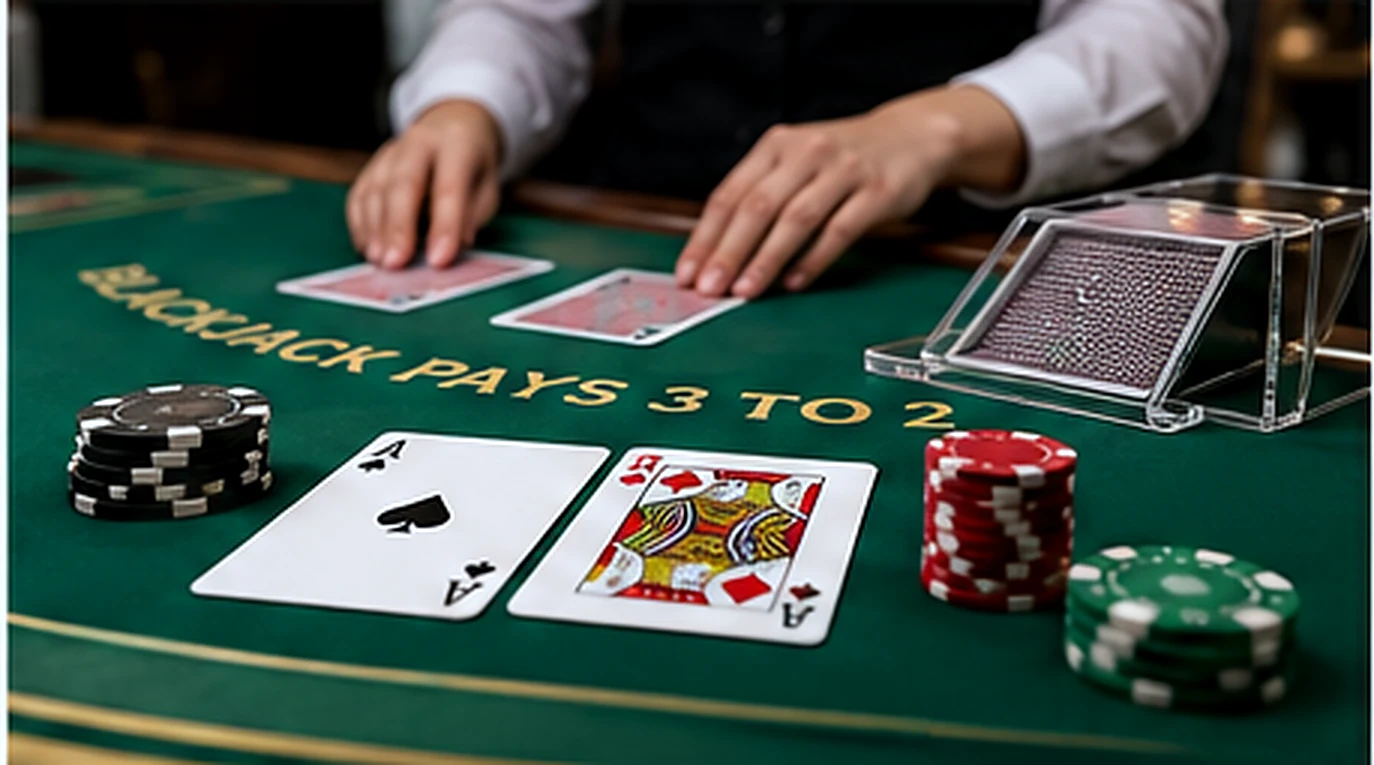
Live blackjack has no universal RTP. Deck count, whether the dealer hits soft 17, blackjack paying 3:2 versus 6:5, and doubling, splitting and surrender rules all matter. Published returns usually assume a defined basic strategy. Insurance and side bets have separate house edges; mistakes in strategy change the player's expected return.
Baccarat, poker, and live game shows: separate the bets
Baccarat's Banker, Player and Tie bets have different house edges. Check the commission or no-commission rule at the table. Casino Hold'em uses a paytable; peer-to-peer poker depends on opponents and rake. A single house RTP is not directly comparable across those games. For Lightning Roulette, Crazy Time, Monopoly Live and Dream Catcher, verify the particular wager and multiplier rules rather than relying on a headline return.
A supplier name such as Evolution, Playtech or Pragmatic Play identifies a product provider, not the paytable or approved game configuration currently running. The same caution applies to NetEnt, Microgaming and Games Global titles in RNG slots: the brand is not a certificate.
What a live stream can and cannot prove
The stream may show a croupier spin a wheel or draw from a card shoe. Optical character recognition (OCR), sensors or dealer input translate that physical result into data displayed in the casino interface.
Verification Transparency Matrix: Player vs Regulator Access
Compare the visible result with the displayed outcome, but don't confuse video access with full verification. The feed cannot reveal synchronized server clocks, CCTV records, card-shuffler maintenance, dealer training or the exact moment a wager was accepted. Stream delay makes that last distinction especially important.
For a disputed hand or spin, trace accepted wager → timestamp → physical result → OCR or dealer entry → displayed result → account settlement. Each step should match the next. A recording without a round log can leave the crucial disagreement unresolved.
How operators measure RTP and investigate discrepancies
- Configuration: match the game ID, jurisdiction, variant, paytable and approved software to the live build. Record change approvals and verify software hashes or signatures where available.
- Transaction integrity: reconcile round IDs, timestamps, choices, accepted bets, voids, refunds, wins and balances across the casino platform, remote gaming server (RGS) and live-dealer system.
- Actual returns: calculate winnings divided by turnover for a defined category and period. Separate side bets, bonuses, progressive jackpots, currencies and stake levels where combining them would mislead.
- Statistical monitoring: assess differences against tolerance bands based on sample size, hit frequency, payout variance, volatility, standard deviation and confidence intervals. An outlier requires investigation, not an automatic allegation of rigging.
- Studio integrity: inspect roulette wheels, shufflers, shoes, dealer procedures, CCTV, access records, OCR accuracy and equipment faults. Investigate unusual outcome distributions and document fixes or repeat tests.
In a hypothetical dataset with $1,000,000 wagered and $965,000 paid out, actual RTP is 96.5% and GGY is $35,000. That alone does not show a defect in a game designed for 97% theoretical RTP. The assessment also needs the game mix, sample size, payout variance and approved math.
Gaming Laboratories International (GLI) describes mathematical RTP analysis using calculations or simulations and field-data reviews that compare actual outcomes with statistical bounds. Roulette tests may examine pocket frequencies. Blackjack requires extra care because theoretical return can depend on player strategy.
What an independent testing certificate covers
GLI, eCOGRA, iTech Labs and BMM Testlabs may test game mathematics, random number generators (RNGs), platform controls or live-dealer operations. An audit of payouts and a studio review of equipment, staff, cameras and security answer different questions. The lab's name alone does not identify what it examined.
On a certificate, look for the tested product, version, date and standard. An RNG certificate doesn't verify a roulette wheel. A studio review doesn't disclose current actual RTP. And approval for one software build may not extend to later changes. GLI-19 is a technical standard for interactive gaming, not a US state license.
Overseas rules cannot substitute for US state approval. UK Gambling Commission RTS 3C concerns game information, RTS 7 random outcomes and RTS 17A live-dealer auditability. The Malta Gaming Authority and Ontario's AGCO/iGaming Ontario apply other frameworks. Check the rules in the player's own jurisdiction.
Where provably fair verification does - and does not - apply
Not for a conventional physical live-dealer table. In a game with a documented provably fair protocol, a player may compare the published server-seed commitment with its later reveal, then recompute an outcome using the client seed, nonce and an algorithm such as SHA-256 or HMAC. Some separate products use Chainlink VRF. Verification depends on the actual implementation and available tool.
That check can establish whether an algorithm used the committed inputs. It cannot validate a paytable, house edge, balance transfer, card shuffle or physical roulette wheel. Writing a result to a blockchain does not replace transaction logs or live-studio inspection.
For a high-volatility slot with 96.2% RTP and a variance of 45.0, a sample of 10,000 spins provides a 95% confidence interval spanning from 83.1% to 109.3%. To observe empirical RTP converge within +/-0.5% of the theoretical expectation requires upwards of 10,000,000 simulated game rounds.
RTP red flags and how to contest a live round
- The advertised RTP has no identifiable game variant, wager assumptions, or rules screen.
- The certificate is only a decorative logo or covers RNG games while being used to promote live tables.
- A casino publishes one blended payout percentage for slots, live roulette, blackjack, and high-payout side bets without explaining the mix.
- The operator treats a small player's losing streak as statistical evidence - or dismisses a specific incorrect settlement by quoting long-run RTP.
- A live result and account history disagree, but support cannot identify the round, timestamp, accepted stake, or settlement rule.
For a dispute, keep the table name, round ID, timestamp and time zone, wager, stake, visible result, replay or screenshot and account entry. Ask support to identify where its round log and payment record agree with the rules. If the answer is inadequate, follow the state regulator's complaint procedure. New Jersey DGE and Michigan MGCB both describe operator-first complaint routes.