
Beyond Slots: Interactive Casino Formats
- Home
- Product Innovation
- Beyond Slots: Interactive Casino Formats
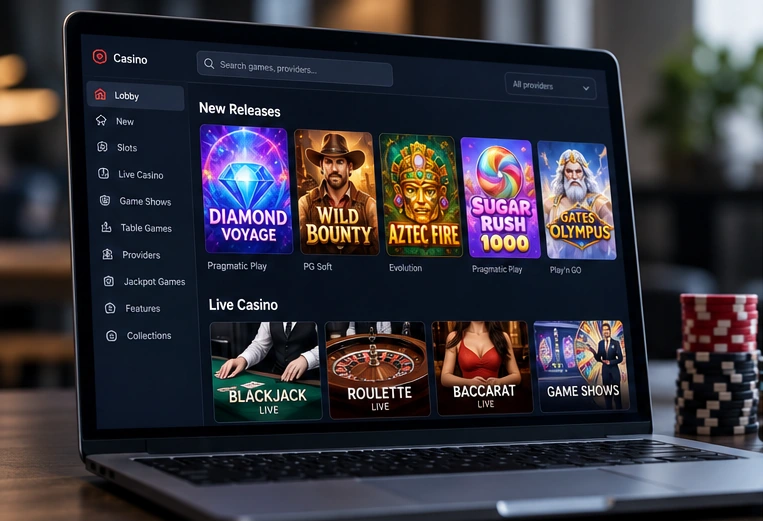
Slots still dominate the casino lobby - but not every player's attention
Slots still dominate casino catalogs. In a November 4, 2025 snapshot of roughly 26,000 games across 17 countries, Blask counted 91.5% as slots. Yet nearly 30% of the 20 most visible titles were non-slot games, including live tables and crash formats. That measures global lobby placement - not U.S. player demand or a decline in slot availability.
Catalog size and what a visitor notices are different measures. A filmed dealer shows a physical draw; crash games ask when to exit; Slingo works with a numbered grid; chat makes a shared session visible. A changed theme or extra button, by itself, is not a new game format.
Where the interaction actually happens
| Format | Player action | What remains outside the player's control |
|---|---|---|
| Live dealer and game shows | Place bets, choose permitted features, sometimes participate in chats or bonus selections | Card draws, wheel results and the game's disclosed random mechanics |
| Crash games | Choose when to cash out or set an automatic cash-out threshold | The randomly determined crash point |
| Mines, Plinko, tower and runner games | Pick a tile, path, drop or stopping point, depending on the title | Random hazards, probabilities and the payout schedule |
| Slingo and other hybrids | Build patterns and, in some versions, assign wild symbols | Randomly generated numbers, symbols and the mathematical return |
| Social or streamer-led play | Observe, chat, vote or join a shared session | Another person's results and independently determined outcomes |
| Skill-based competition | Use timing, strategy or execution to influence performance | Other competitors, residual chance and the contest's scoring rules |
Live game shows turn the casino table into a broadcast format
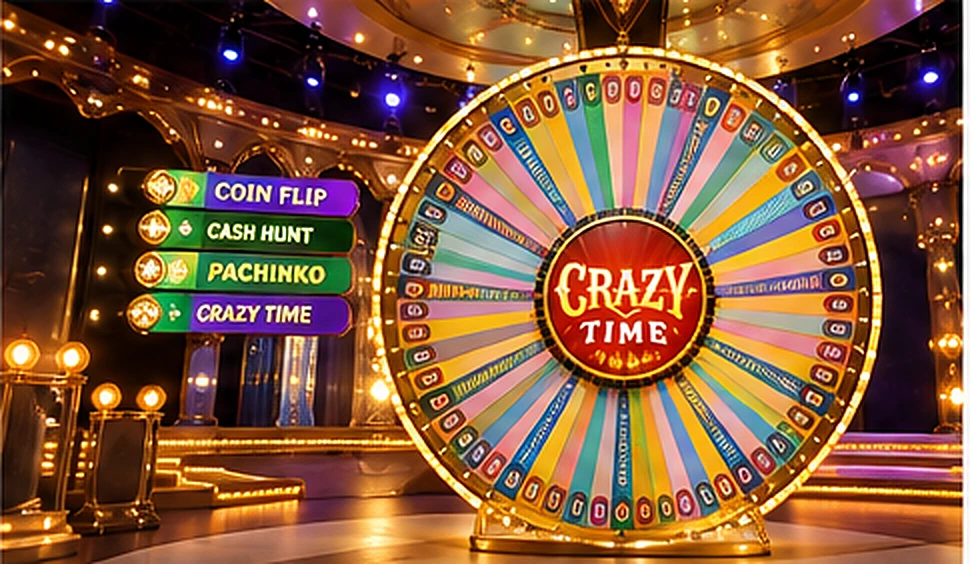
Live dealer games started with cameras aimed at blackjack tables and roulette wheels. Evolution and other suppliers now use multiple HD camera angles, presenters and mobile betting controls. The hard part is synchronizing the video with the betting window: a wager must be tied to the correct round.
Dream Catcher established the live money-wheel format; Lightning Roulette added randomly assigned multipliers to roulette. Hasbro-branded MONOPOLY Live uses a physical wheel, presenter, 3D effects and bonus rounds. Crazy Time features Cash Hunt, Coin Flip, Pachinko and Crazy Time bonus events. Mega Ball and Deal or No Deal Live borrow from bingo and TV game shows. Their mechanics work as broadcasts rather than reel spins.
Pragmatic Play's Sweet Bonanza CandyLand adapts the Sweet Bonanza look for a hosted wheel game. Sweet Spins, Candy Drop and Bubble Surprise are distinct bonus rounds; Sugar Bomb Booster adds an optional betting feature. Studio footage and animation share the screen, but the rules determine what the player's selections actually change. Viewers can choose a betting position without steering the wheel. A readable bet cutoff, bonus rules and result history matter more than elaborate visuals, especially when a phone connection stutters.
MGM Resorts and Playtech Live have developed branded productions linked to Las Vegas properties. Ezugi, BetGames, Eeze, Live88 and LuckyStreak also supply live formats. U.S. availability, however, depends on the operator's state authorization and game approvals - not a supplier's worldwide lineup.
Crash and instant games put the decision inside a short round
Spribe's Aviator brought the rising-multiplier crash screen to a wide audience; Bustabit predates it. The multiplier climbs until the round crashes. Players who exit first receive a payout based on their cash-out point. An auto cash-out setting sends the exit instruction automatically; it cannot alter the random crash point. Earlier rounds do not predict the next one.
The pressure comes from choosing under a short deadline while the endpoint remains random. Shared rounds, chat and visible cash-outs can make the experience social, not more predictable.
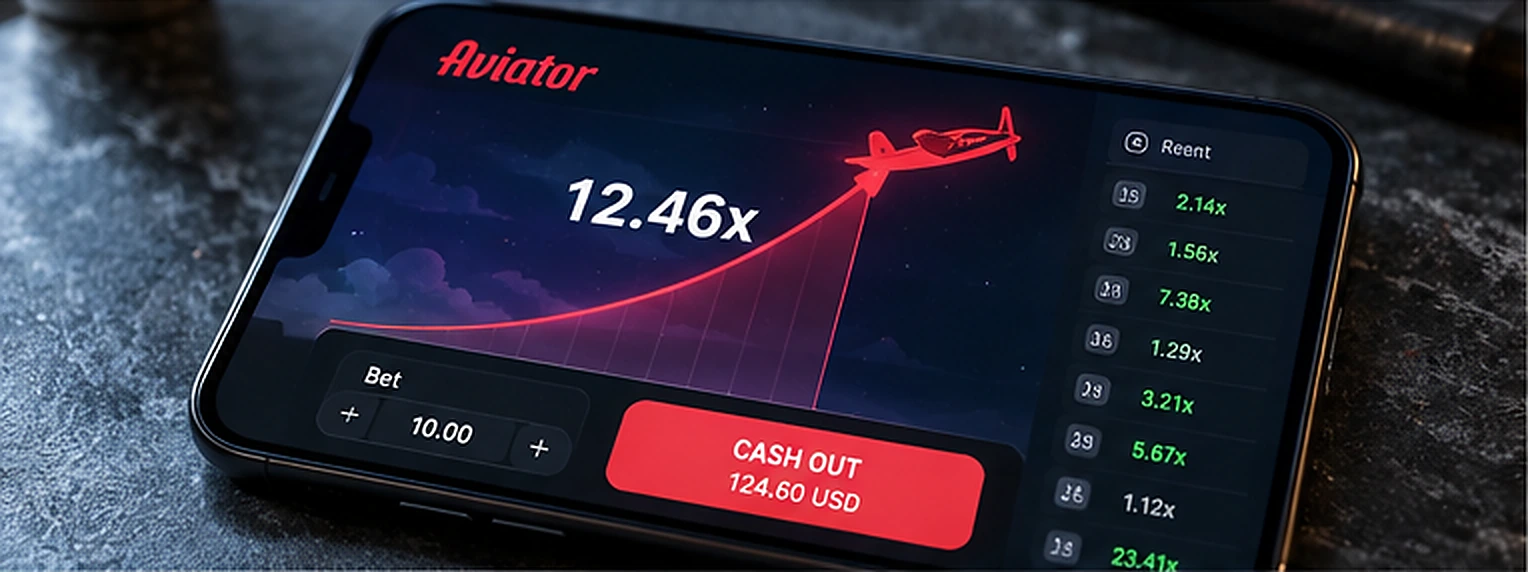
Mines asks whether to reveal another tile or stop; Plinko presents an outcome through a falling ball. Tower and runner games turn a stop-or-continue decision into climbs or crossings. Fishing and arcade releases may involve aiming or timing, although those actions do not necessarily change the mathematical result. Each title's rules decide whether skill matters.
Instant games cover much more than aircraft-style crash. In an August 2026 scan, CROCO Games found dedicated instant/crash shelves in 225 of 964 publicly visible casino lobbies.
Examples included Galaxsys' TowerRush, InOut's Chicken Road 2 Bonus and Mine Slot, Gamzix's Chicken Cashway and Plinko Max, Gametimetec's Aviatron, and BGaming's Fishing Time. CROCO also listed Avix, Plinko Fortune and Prime Mines. The survey is not a count of games approved in U.S. states.
An instant game's rules should identify when a choice affects payout, when it only reveals a result, and what happens if the connection drops before cash-out. The label 'interactive' cannot answer those questions.
Hybrid formats borrow game logic, not just recognizable imagery
Gaming Realms' Slingo combines bingo-style number matching with slot spins. On a typical 5-by-5 grid, completed lines advance a prize ladder; some variants let players place wild symbols. That board-level decision makes the hybrid distinct from a conventional reel spin.
Handling Millisecond Cashout Race Conditions in High-Multiplier Rounds
When an interactive multiplier curve exceeds 100x, hundreds of concurrent connected players trigger simultaneous manual cashout requests within identical millisecond frames. Legacy HTTP request-response loops create unacceptable latency jitter, resulting in disputed rounds. Modern architectures isolate the multiplier broadcast loop onto a decoupled Erlang/Elixir or Go cluster, executing cashout commitments against localized in-memory state before asynchronous PAM ledger reconciliation.
Slingo Money Train takes inspiration from Relax Gaming's slot series. Slingo Fowl Play, Slingo River Re3ls, Tetris Slingo and Slingo SPACE INVADERS apply different themes to the number-grid structure. Their rules matter more than a familiar franchise name.
Hybrids need not have a live host. Real Dealer's Cinematic RNG uses recorded dealer video with random-number-generated outcomes; Vault Run Roulette adds multipliers and collection features. Prerecorded video, a physical live draw and a simulated table can look similar on screen but are not the same mechanism.
Traditional slots innovate too. Big Time Gaming's Megaways varies the reel layout; NetEnt, Red Tiger, Nolimit City, Push Gaming, Amusnet and Amatic develop new reel structures, bonuses and volatility profiles. Those changes can matter without turning a slot into a different casino category.

Community, competition and skill are three different product ideas
Livespins lets an audience bet behind a streamer. Live chat, shared Aviator-style rounds and polls bring social activity into casino products; tournaments, leaderboards, missions, achievements and loyalty programs add competitive or progress-based layers. Those features change how people participate, not necessarily the underlying game math. A leaderboard may rank wagers, winnings or event points; those rankings reward different behavior. Neither a streamer's result nor a crowded chat changes the odds of an independent random draw.
Skill-based gambling needs a stricter test. Timing, targeting, strategy or execution may decide a contest in solitaire-like challenges, aiming games or head-to-head matches. MegaFair Games places Mega Candy Cash and Mega Wild Fish in that discussion. Players need to know how scores are computed, how opponents are matched and what prevents collusion. A moving target on screen does not prove skill controls the payout.
Esports wagers and sports betting belong to neighboring markets. Forecasting a match is not the same activity as competing in a skill contest or playing an RNG casino game, and U.S. laws may treat them differently.
The invisible innovation: synchronization, mobile UX and distribution
A live stream is only useful if its betting clock matches the action. HD or 4K video, low latency, synchronized round data and a firm wager cutoff are practical requirements. WebRTC can carry video; WebSockets, chat SDKs and related services update the interface. Streaming quality alone cannot confirm that a bet was accepted.
Studios may combine chroma key, augmented reality (AR), 3D animation and physical sets. HTML5 and portrait-mode layouts bring them to phones. Clear tap targets, accessible rules, a reliable reconnect flow and a visible bet confirmation matter when a betting window lasts only seconds.
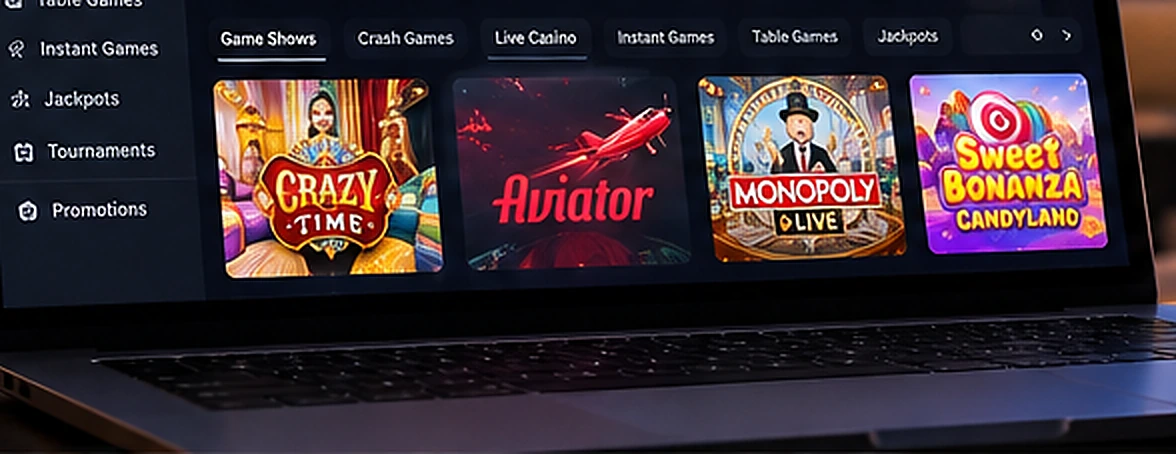
Distribution is a separate problem. Operators use APIs, aggregators and shared wallets to offer a portfolio across jurisdictions. SOFTSWISS covers slots, RNG tables, live games, crash, fishing, arcade and other instant formats. Evolution, Pragmatic Play and Playtech supply game content, while platforms such as Delasport provide related services. Personalized lobby tiles can improve discovery; they do not verify fairness.
Product teams can test whether people find a format and understand its rules, not only whether they click Play. Retention, gross gaming revenue (GGR) and lifetime value (LTV) need context from technical failures, disputes and the use of player-safety controls. Higher play frequency accompanied by more complaints is a warning, not clear evidence of success.
What U.S. players and product teams need to verify
A global provider catalog does not establish what is legal in the United States. Real-money online casino access depends on state law, licensed operators, approved games, geolocation and age checks.
Michigan's Gaming Control Board, for example, maintains a list of authorized internet-gaming websites. Many regulated casino offerings set a minimum age of 21; the controlling rules are those of the relevant state and product.
Some instant games use 'provably fair' checks: cryptographic hashes and server/client seeds let a player verify aspects of a completed round. That feature does not replace licensing or independent testing. Regulated games may instead rely on certified random-number generators (RNGs), clear rules and return-to-player (RTP) disclosures. RTP describes a long-run statistical average, not the return on a single session.
Fast rounds, auto cash-out, bonus animations and loyalty missions can shorten the time between bets. The UK Gambling Commission reported reduced play intensity after restrictions on slot features including autoplay and spin speed. Those findings concern Great Britain and regulated slots; they cannot be treated as a measured effect for U.S. crash games.
Players should be able to find spending and session information, limits where available, and self-exclusion controls without searching through menus. For gambling-related help in the U.S., the National Council on Problem Gambling lists the National Problem Gambling Helpline at 1-800-MY-RESET.
Regulators including the UKGC and MGA enforce strict boundaries regarding simulated skill and decision loops. Features such as manual cashout timing must never deceive players into believing that outcome probabilities depend on motor dexterity or hand-eye coordination. Furthermore, minimum round duration mandates in specific European jurisdictions directly constrain turbo reveal mechanics in interactive arcade formats.
How to judge whether an interactive format is real product innovation
The clearest test for a new format is simple: what can the player choose, what does that choice change, and how can its effect be verified? A live money wheel and a one-tap mobile game offer different forms of participation. Neither should obscure the odds or the cost of play.
- Identify the decision. Does the player choose a bet, a cash-out time, a grid position, a contest move - or only watch an animation? Ask which choice changes the result or payout.
- Check the mechanism. Read the game rules, payout table, RTP or verified skill-scoring criteria. Treat multiplier displays and animations as presentation until the underlying math is disclosed.
- Confirm the delivery model. Is the dealer live, prerecorded, or simulated? Can the system recover from latency, dropped video or an interrupted cash-out request?
- Verify local eligibility. Use a state regulator's licensed-operator list and the operator's permitted game catalogue, not a global provider advertisement or streamer link.
- Measure the full effect. For product teams, compare discoverability, comprehension, technical failures and player-safety indicators alongside adoption, retention and GGR. A higher session count is not automatically a better outcome.
An interrupted round exposes the difference between a polished interface and a trustworthy one. If a connection drops near cash-out, the player needs to see whether the request registered, when the round closed and how the wager settled.