
What Defines Innovation in iGaming?
- Home
- Product Innovation
- What Defines Innovation in iGaming?

An iGaming product is innovative when it makes something meaningfully better for players or operators, and the improvement holds up in use. That could mean a new slot mechanic, a clearer withdrawal process, more useful game discovery, or fewer platform failures. Novel technology alone is not the test. The change needs an identifiable benefit, a way to verify it, and a workable place in a regulated gambling market.
Consider an AI dashboard that predicts churn but cannot tell a customer why a withdrawal is pending. A simple payment-status screen might resolve that uncertainty. Who benefits, what changes, how can it be checked, and which safeguards apply? Those questions separate an innovation from a feature announcement.
What separates real product innovation from a new feature?
Four practical tests apply to casino games and sportsbook infrastructure:
The 4-Pillar Validation Gate for iGaming Product Strategy
Authentic innovation requires verifiable player or operational utility rather than marketing novelty. Three essential validation criteria must be established prior to roadmap approval:
- Quantifiable Friction Elimination: Direct reduction in measurable player hurdles, such as verified deposit completion latency or transparent withdrawal timelines.
- Engineering Concurrency Resilience: Demonstrated architectural stability under peak round concurrency without database locking or state corruption.
- Jurisdictional Compliance Compatibility: Full auditability across licensing frameworks without diluting mandatory responsible gaming safeguards.
- Does it solve a specific problem? Identify a real player pain point or operator constraint: confusing onboarding, slow loading, unclear rewards, fragmented support, limited game discovery, or expensive integration.
- Does the experience improve? Show a change in usability, accessibility, product quality, transparency, entertainment value, or operational reliability - not merely a new visual treatment.
- Can the improvement be demonstrated? Use player feedback, controlled experiments, task-completion data, service outcomes, or verified performance metrics rather than launch-day excitement alone.
- Can it operate safely at scale? Check fairness, player protection, cybersecurity, regulatory compliance, unit economics, and the effort needed to maintain the feature across markets.
A virtual-reality lobby may attract attention while adding hardware and accessibility barriers. By contrast, a clearer withdrawal timeline could reduce avoidable support calls without changing the casino game itself.
Start with the player journey, not the technology stack
A first-time customer needs to check eligibility, verify an account, understand the rules, find a game, manage payments, and reach support. Returning customers may care more about stable navigation, accessible settings, or turning off promotions. User research should establish where those tasks break down. Operators need accurate reporting and support systems that staff can maintain.
Good mobile-first UX/UI shows up in readable game rules, responsive screens, thumb-friendly controls, and clear transaction histories. Faster onboarding and permitted one-tap deposits can help, as can fewer surprises during withdrawals. Accessibility belongs in the same discussion: contrast, readable type, predictable controls, and a way to avoid motion-heavy effects.
Not every extra step is bad friction. Know Your Customer (KYC) checks, age verification, and geolocation protect access to licensed products. Improve the instructions, request information at the right moment, secure personal data, and explain failed checks. Do not delete the check to make conversion look better.
Where product innovation shows up in iGaming
Game design: familiar rules, genuinely different play

Online slots, live casino, sportsbook, esports betting, instant-win, crash, and hybrid games leave room for different kinds of change. Studios can alter pace, physics-based interaction, storytelling, multiplayer features, or how quickly a player understands the rules. For live dealer blackjack, baccarat, and roulette, better camera angles, streaming, and table access may matter more than changing the underlying game. Evolution's Crazy Time shows how a live game-show format differs from a conventional table broadcast.
Feature vs. Genuine Innovation: Operator Diagnostic Matrix
Megaways, cluster pays, Hold and Win, 3 Pots, and bonus buy options change game structure; they do not promise better odds. WebGL, WebGPU, 3D graphics, and focused R&D can improve performance or shorten production cycles. BGaming's Aviamasters 2 builds on a landing mechanic with boosters and additional choices. Whether that is an improvement depends on how the game plays, not on how many features were added.
The math still matters. Return to Player (RTP) describes a theoretical long-run return; volatility concerns the spread of outcomes. Neither predicts a single session. Random number generators (RNGs), independent testing, clear rules, and correct disclosures remain essential. A “provably fair” or “blockchain-powered” label does not replace regulator-required approval. Nor should a skill-based element imply an advantage the game cannot demonstrate.
AI and personalization: better decisions, not just more targeting
Artificial intelligence (AI) and machine learning can analyze real-time data for player segmentation, game recommendations, fraud detection, customer relationship management (CRM), and support. Predictive analytics may expose failed onboarding or recurring service issues. Generative AI and AI agents can handle routine requests; MLOps processes help teams catch errors and drift after deployment.
The objective matters. Test recommendation engines for relevance, privacy, explainability, and ways to correct mistakes. Churn models should not send stronger incentives to people showing signs of gambling harm. Those signals may instead justify marketing suppression, safer-play support, or human review.
Gamification: connected experiences without reward overload

Quests, missions, tournaments, leaderboards, races, loyalty programs, challenges, and community features can make progression easier to follow. Connected systems matter more than scattered promotions. EveryMatrix's EngageSuite approach illustrates how loyalty and progression tools can be organized around a player journey.
Gamefulness is not just another reward. Free spins, jackpots, progressive jackpots, random drops, and bonuses can raise activity without establishing genuine loyalty or safer engagement. Too many campaigns produce bonus fatigue or pressure to spend. A bonus engine linked to CRM can set eligibility, frequency, budgets, and stop rules across providers.
Platform, payments, and the innovations players rarely notice
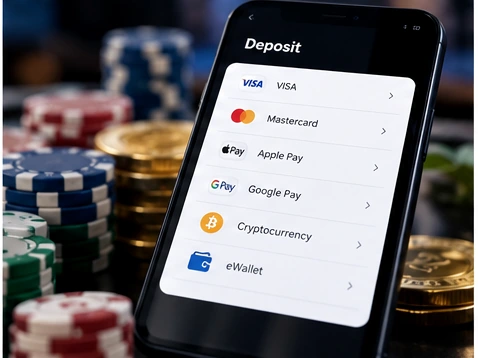
Some product changes are almost invisible. A player account management (PAM) system, unified wallet, modular architecture, cloud infrastructure, application programming interfaces (APIs), and game aggregation can connect casino content, sportsbook services, payments, loyalty, and support. Casino-sportsbook convergence and omnichannel access help when permitted products share accurate account information. They cause problems when separate eligibility rules or promotions get mixed together.
Payment quality is easier to judge than a technology label. Do permitted deposits succeed? Are fees, verification steps, and withdrawal times clear before a transaction stalls? Claims of instant withdrawals still depend on banks and checks. Cryptocurrency, blockchain records, and tokenized loyalty introduce custody, regulatory, and consumer-protection questions.
Custom, turnkey, and white-label iGaming platforms involve different trade-offs. Look at APIs, ownership, data portability, vendor lock-in, cybersecurity, scalability, maintenance cost, time to market, and time to revenue. Product, engineering, payments, and risk teams need to coordinate releases. A faster launch is no victory if outages or compliance work increase.
Why U.S. regulation is part of the product, not an obstacle beside it
In the United States, permissions for online casino games and online sports wagering differ by state. Operators must verify the player’s location, identity, eligibility, approved games, and available safeguards. New Jersey and Pennsylvania, for example, administer their own online gaming rules and licensing systems.
Compliance by design means involving legal, risk, security, quality assurance, and operations before release. KYC, anti-money-laundering (AML) checks, geolocation, fraud controls, data security, RNG testing, and secure authentication all require auditable systems. A feature that cannot pass those checks is not ready for the market.
Deposit limits, time-outs, self-exclusion, clear account histories, and accessible support help players retain control. The National Council on Problem Gambling and the American Gaming Association publish standards and codes covering player protection, marketing, and age verification; those materials are guides, not substitutes for a state’s binding rules.
Higher gross gaming revenue (GGR) cannot justify confusing bonus terms, weakened self-exclusion, or an increase in risky play. Protection is a constraint on product decisions, not a number to offset against retention.
How can you tell whether an iGaming innovation works?
Daily active users (DAU), Day 1, Day 7, and Day 30 retention, churn, lifetime value (LTV), conversion, and GGR describe business performance. They do not prove product improvement by themselves. A promotion may briefly lift activity. Fewer support contacts might mean a clearer interface - or that the help link is harder to find.
Each change needs one outcome metric and a guardrail for unintended effects.
| Proposed change | Evidence of improvement | Essential guardrail |
|---|---|---|
| Clearer verification and onboarding | Eligible-user completion rate and time to verified account | Failed checks, false approvals, complaints, and fraud |
| Faster payments and withdrawals | Successful transactions, processing time, resolved payment tickets | Payment fraud, disputes, security incidents, and disclosure accuracy |
| Personalized discovery or gamification | Relevant-feature use, satisfaction, and sustained voluntary engagement | Excessive promotional exposure, risky-play indicators, opt-outs |
| Modular platform or unified wallet | Deployment time, reliability, cross-product task success, operating cost | Outages, data errors, access-control failures, compliance defects |
For a controlled rollout, define the success threshold before launch and compare matched eligible groups. Break results out by device, product, and licensed state when relevant. Include support and implementation costs. No experiment should relax safeguards or put vulnerable players into riskier gambling situations.
Which innovations deserve priority?

Suppose a roadmap offers three ideas: a VR casino lobby, clearer withdrawal tracking, and AI-powered discovery. Frequent payout complaints make withdrawal transparency the practical priority. Trouble finding games may support better recommendations, provided privacy and safer-play rules hold. VR could serve a niche audience but be a poor fit for mainstream mobile players because of hardware, accessibility, and maintenance demands.
Before approving a new feature, ask:
- What observable player or operator problem is being solved, and what evidence shows it exists?
- What changes in the user journey or operating model compared with the current solution?
- Which users and jurisdictions can actually use it, and who should be excluded?
- How will its benefit be measured without treating increased gambling activity as the only success?
- What failure would cause the rollout to stop, and who owns the safeguard?
New technology has to win a place on the roadmap. A feature with no documented user problem, no measurable improvement, or an unsafe failure mode belongs in discovery rather than release planning.