
RegTech Solutions for Licensed Operators
- Home
- Payments & RegTech
- RegTech Solutions for Licensed Operators

What RegTech actually does for a licensed gambling business
A license condition matters when it changes what a player can do. The account may pass registration but fail a location check before a wager, or trigger a sanctions review before withdrawal. RegTech turns those rules into account, payment, and gambling decisions rather than separate compliance paperwork.
The player account management (PAM) platform, gaming backend, cashier, payment gateway, PSP, fraud engine, case-management tool, and reporting system need to exchange the same decision data. A rules engine checks jurisdiction, account status, funding instrument, transaction history, screening results, and player restrictions, then approves, blocks, or sends the action for review.
- Identity and eligibility: age verification, customer identification, geolocation, prohibited-person screening, and account authentication.
- Financial crime controls: customer due diligence (CDD), enhanced due diligence (EDD), sanctions and politically exposed person (PEP) screening, transaction monitoring, and investigations.
- Payments and fraud: approved payment methods, account-name matching, deposit and withdrawal controls, chargeback management, and reconciliation.
- Player protection: self-exclusion, cooling-off periods, deposit or loss limits, behavioral risk monitoring, and timely interventions.
- Evidence and oversight: policy versioning, audit trails, case files, testing results, regulatory reports, and third-party oversight.
Start with jurisdiction, license scope, and product type
In the United States, permission depends on the state and the gambling product. Online casinos, sportsbooks, poker rooms, lottery products, and land-based casinos do not necessarily share licensing conditions, age requirements, technical standards, or reports. An already verified customer can still be ineligible to place a particular wager from the current location.
Harmonizing Onboarding Velocity with Anti-Money Laundering Rigor
Modern regulatory technology transforms compliance from a static checkpoint into an automated, continuous operational pipeline. Effective RegTech stacks accomplish three critical objectives:
- Automated Identity & Age Verification: Instant validation of player credentials against authoritative databases during registration within seconds.
- Continuous PEP and Sanctions Screening: Perpetual monitoring against global financial watchlists without interrupting legitimate platform activity.
- Behavioral AML Detection: Real-time flagging of rapid velocity spikes, smurfing patterns, and structuring behaviors.

New Jersey regulates internet gaming account verification, player controls, and location restrictions through the New Jersey Division of Gaming Enforcement. New York's mobile sports wagering geolocation regulation addresses bets made from outside the state, attempted circumvention, and device tampering. Pennsylvania's interactive gaming rules also connect eligibility with identity, age, and location. 'US coverage' on a vendor sales sheet does not establish compliance in all three states.
Federal requirements need a separate scoping decision. Under the Bank Secrecy Act (BSA), FinCEN guidance for covered casinos and card clubs describes risk-based anti-money laundering (AML) programs, internal controls, independent testing, training, records, and suspicious activity reporting. An online gambling business is not automatically covered by every casino-specific BSA provision; its legal structure and activities determine which rules apply.
The Unlawful Internet Gambling Enforcement Act (UIGEA) governs restricted transactions related to unlawful internet gambling and imposes duties on certain participants in designated payment systems. That affects how acquiring banks, card networks, payment processors, and merchants distinguish lawful activity from prohibited payments; a state gaming license alone does not settle every payments question.
Before buying software, build a license-and-obligations matrix. For every product and jurisdiction, capture the regulator, minimum age, geolocation control, permitted payment methods, reports, retention periods, and technical certifications. Give each obligation an owner and a testable evidence record.
KYC and age verification should happen at the right moment
Registration, activation, first-time deposit (FTD), wagering, new risk flags, and withdrawal are separate verification triggers. US onboarding commonly checks name, date of birth, residential address, Social Security number or another permitted identifier, and sometimes device or identity-document data. When electronic records do not match, an operator may need a document-based check; timing depends on state law and approved controls.
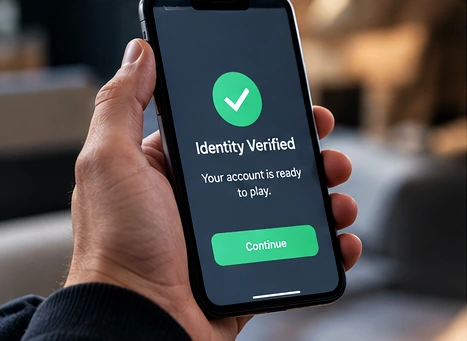
Identity verification (IDV) providers may use document authentication, optical character recognition (OCR), near-field communication (NFC) on supported IDs, selfie-to-ID biometric matching, and liveness checks. Data matching can clear straightforward cases without a document upload. Device fingerprinting, IP intelligence, and behavioral analytics help flag account takeover (ATO), synthetic identities, deepfakes, location spoofing, and multi-accounting ('gnoming'); suspicious results call for proportionate step-up review.
A verified account can become risky. A new bank account, unfamiliar device, sanctions-list change, inconsistent identity record, or unusually large withdrawal may warrant further checks. Continuous KYC means reviewing new evidence when it matters, not requesting the same paperwork from every customer at every payment.
The UK applies a different timetable. The UK Gambling Commission's LCCP 17.1.1 requires identity checks before gambling, while LCCP 3.2.11 covers age verification before a deposit. Foreseeable identity checks cannot routinely be deferred until withdrawal. These are UK requirements, not blanket US rules.
AML transaction monitoring must follow the money
Several deposits followed by little or no wagering and a prompt withdrawal warrant a closer look. Other laundering indicators include structured deposits, unrelated third-party transfers, conflicting source-of-funds claims, rapid changes of payment instrument, and abrupt behavior shifts. Placement, layering, and integration can run through both gaming and payment flows. Check both ledgers.
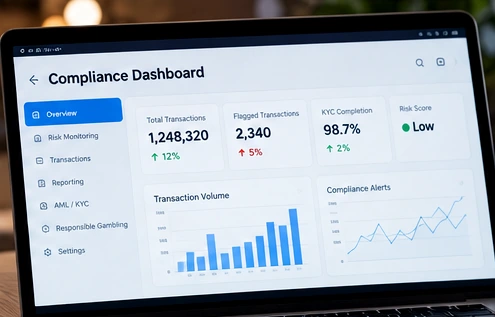
AML monitoring needs the customer's risk profile, geography, gambling product, funding method, transaction size, total activity, and betting history. Customer due diligence (CDD) sets a baseline; enhanced due diligence (EDD) investigates elevated risk. Source of funds (SoF) asks where money for a transaction came from. Source of wealth (SoW) asks how the person accumulated assets. A request for generic 'proof of income' may answer neither question.
Sanctions, politically exposed person (PEP), and adverse-media screening can generate useful leads, but a name match is not proof of wrongdoing. Fuzzy matching produces false positives; aggressive suppression can hide genuine matches. Investigators need the alert, transaction records, notes, escalation history, and disposition in one case file. Where required, the designated team decides whether to submit a suspicious activity report (SAR) or suspicious transaction report (STR) to the competent financial intelligence unit.
FinCEN documents a wide range of suspicious-activity red flags for covered US casinos and card clubs. An alert merits investigation, not an automatic accusation. Review deposits together with wagers, winnings, bonuses, reversals, and withdrawals; otherwise an apparent cash-out may conceal little or no actual play.
Payment compliance: deposits, routing, payouts, and reconciliation
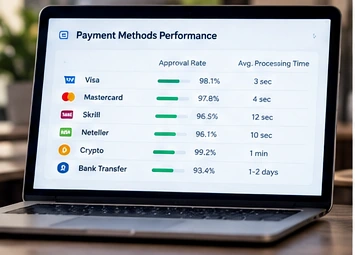
An approved payment can still be the wrong payment. It may exceed a deposit limit, use a prohibited funding instrument, create chargeback exposure, or be followed by a wager from an unauthorized location. A fast withdrawal to somebody else's account is no success either. Approval rate means little without eligibility and ownership controls.

Control the transaction before choosing a payment route
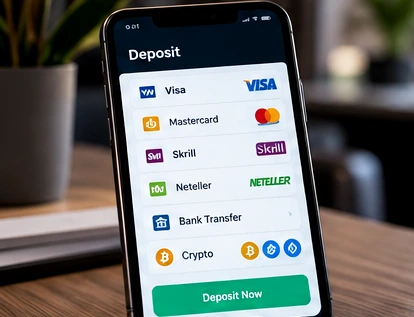
Before requesting authorization, the cashier checks account eligibility, deposit limits, permitted instruments, and risk flags. The PSP and acquirer then run their own controls. Merchant category code (MCC) 7995 and other applicable classifications must describe the merchant accurately, but no MCC makes an unlawful gambling transaction lawful.
Card payments, debit products, bank transfers, automated clearing house (ACH) transactions, pay-by-bank, e-wallets, and alternative payment methods (APMs) differ in settlement timing, reversal exposure, processor policy, and state availability. A deposit rail approved for sports betting in one state may not be available to an online casino in another.
Orchestrate for reliability without routing around compliance
Payment orchestration gives the cashier access to several PSPs, gateways, or acquirers. Routing and controlled retries can keep deposits available during a provider outage or an eligible soft decline. They must not retry around a sanctions block, self-exclusion, restricted instrument, legal prohibition, or conclusive fraud decision.
Three-Domain Secure (3DS) can authenticate supported card payments and help with disputes. Strong Customer Authentication (SCA) under Europe's PSD2 applies in its own regulatory scope; it is not a default rule for every US gambling deposit. Tokenization and PCI Data Security Standard (PCI DSS) controls help protect card data. The PCI Security Standards Council sets the framework, while each operator still needs to establish its remaining compliance scope.
Make withdrawals auditable, not unnecessarily difficult
For a withdrawal, check wallet balance, lawful bonus or wagering terms, verified identity, payout-account ownership, unresolved fraud alerts, and any permitted hold. Keep the reason code, reviewer, and timestamp. When a payout stalls, give the customer a resolvable explanation rather than an indefinite 'compliance review.'
Responsible gambling belongs inside the payment decision
Responsible gambling (RG) uses many of the same real-time account and payment events as AML, but serves a different purpose: limiting harm. Deposit and loss limits, session or wagering limits, cooling-off periods, self-exclusion, and interventions need to reach the PAM system and cashier before the next restricted action.
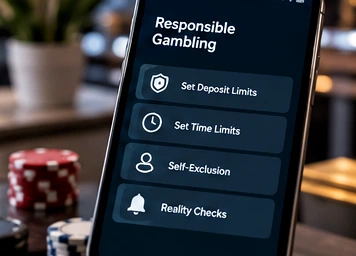
Escalating deposits, repeated declines, unusually long sessions, larger stakes, repeated limit changes, distress messages, or linked accounts may justify an RG review. None is a diagnosis by itself. Teams need context, a proportionate response, and a way to check whether the intervention changed the risk.
A state exclusion list must be synchronized with the operator's accounts. New Jersey's responsible gaming requirements also provide for player tools and protections. Outside the US, GAMSTOP (Great Britain), OASIS (Germany), Spelpaus (Sweden), and CRUKS (Netherlands) have separate coverage and legal triggers; the systems are not interchangeable.
Keep payment fraud, AML holds, cooling-off requests, and self-exclusion as distinct case types. They trigger different decisions and communications. A responsible gambling restriction, on its own, does not justify withholding a legitimate withdrawal without a separate legal basis.
The architecture: one player, one decision trail
A disconnected stack can create conflicting decisions: KYC clears a player, the cashier detects a bank-account name mismatch, a responsible-gambling limit is active, and the sportsbook still accepts a wager because the systems have not synchronized. An event-driven decision trail should stop the conflict before the bet.

- Collect: The PAM, wallet, gaming platform, geolocation provider, cashier, and PSP send timestamped events through documented APIs or webhooks.
- Normalize: A secure event layer maps account IDs, device identifiers, payment references, legal entities, and transaction states to a consistent schema.
- Decide: A jurisdiction-aware rules engine evaluates license scope, player eligibility, sanctions status, fraud signals, limits, and payment restrictions.
- Escalate: High-risk or ambiguous cases move to human review with service-level targets, ownership, and a documented reason for each outcome.
- Prove: A versioned audit trail stores the relevant inputs, rule outcome, reviewer activity, reporting action, and reconciled ledger entries.
The design needs role-based access, encryption, retention rules, data minimization, monitoring, and vendor service-level agreements (SLAs). Privacy obligations follow the actual data and jurisdiction: the EU General Data Protection Regulation (GDPR) is relevant when its territorial rules apply. Artificial intelligence (AI) and machine learning (ML) can surface anomalies; operators still need tested models, explainable decisions, and controlled human overrides when funds or account access are at stake.
Game certification is a separate workstream. Independent laboratories may test random number generators (RNGs), remote gaming servers (RGSs), and other technical controls. Secure logs, gross gaming revenue (GGR), tax reporting, and business intelligence (BI) also feed oversight. A shared reporting layer can reconcile the records, but AML software does not certify game fairness.
Global licensing illustrates why rule configuration matters
Cross-border operators must address requirements from regulators including the Malta Gaming Authority (MGA) and the Alcohol and Gaming Commission of Ontario (AGCO). Financial Action Task Force (FATF) recommendations influence national AML laws; they are not a substitute for the applicable local rules.
Germany shows why a single 'compliance supported' label is misleading. The GGL’s LUGAS infrastructure uses a deposit-limit database (Limitdatei) and an activity database (Aktivitätsdatei) for parallel-play controls. Self-exclusion runs through OASIS. A supplier needs to show how it handles each connection and the resulting account decisions.
Brazil's Provisional Measure 1,394 of September 25, 2026 prohibited the offer, operation, intermediation, and advertising of fixed-odds betting, including covered online games, with transitional arrangements for customer balances. A vendor integration built under the earlier licensed regime does not establish permission to operate after that change. Require a legal sign-off before enabling or re-enabling any jurisdiction.
How to evaluate RegTech vendors and payment partners
Most vendors cover only part of the stack. Test whether a supplier can make the required decision, expose its reason, send the result to your existing systems, and export evidence that a regulator or auditor can inspect.
For identity and onboarding, compare Sumsub, Trulioo, Veriff, Jumio, Socure, Persona, and iDenfy against the relevant US states and products. SEON, ComplyAdvantage, LSEG World-Check, NICE Actimize, Sift, and Complytek address parts of fraud, screening, or financial-crime monitoring. Product coverage differs; request written confirmation of the specific workflow rather than treating vendor categories as certifications.
For payments, candidate partners include Paysafe, Nuvei, Trustly, Worldpay, and Adyen, plus Akurateco, PaymentIQ, IXOPAY, Praxis Cashier, and Fluid in payment technology. SOFTSWISS, Playtech, and EveryMatrix may affect how account, game, and cashier events connect. A provider's brand name says nothing by itself about approval from the operator's acquirer, state regulator, or chosen processor.
Questions worth asking during procurement
- Coverage: Which states, game types, legal entities, and licenses are supported today? Is coverage documented, or merely planned?
- Decision quality: What identity pass rate, false-positive rate, manual-review time, and fraud-loss rate can be demonstrated on comparable traffic?
- Payments: Which payment rails, funding instruments, currencies, acquiring relationships, payout methods, and chargeback workflows are supported for licensed gambling?
- Integration: Are there APIs, SDKs, webhooks, sandbox environments, idempotent transaction handling, fallback procedures, and complete audit exports?
- Governance: Who owns screening configuration, case decisions, reporting, data retention, model updates, incident notifications, and regulator-facing evidence?
- Economics: How do verification charges, minimum commitments, per-alert review fees, reserves, settlement costs, and additional PSP integrations affect total cost?
Ask the licensee, PAM vendor, IDV provider, AML platform, PSP, acquirer, and testing laboratory to agree on a responsibility matrix. Check security evidence, recovery plans, subcontractors, incident notices, and a practical way to export case files and decision logs at contract exit.
Implement in stages - and measure more than conversion
Map the transaction journey before booking vendor demos. At registration, deposit, wagering, withdrawal, suspension, and reporting, record the required check and which system stores its evidence. Find mismatched identifiers or timestamps. Then configure the most consequential decision gates and run both pass and block tests.
Pilot with synthetic or otherwise authorized test accounts. Include an underage applicant, an excluded player, a location-boundary crossing, duplicate registration, rapid deposits, a chargeback, a mismatched payout account, and a PSP outage. Confirm that fallback routing cannot bypass a ban and that ordinary withdrawals still reach eligible customers.
Track KYC pass and abandonment rates, first-time deposit conversion, authorization declines, chargebacks, fraud losses, false positives, review time, payout time, unresolved alerts, reconciliation breaks, and SAR timeliness where required. Track audit retrieval time and the rule version used for each disputed payment. Revenue and player lifetime value (LTV) alone cannot show whether controls work.
Under UKGC, MGA, and FinCEN mandates, operators must maintain rigorous Source of Funds protocols. When a player cumulative net deposits cross established affordability thresholds, automated open banking integrations or document verification pipelines must be activated. Operators who fail to substantiate legitimate source of wealth face severe regulatory penalties and license revocations.
Common questions from licensed operators
Is KYC software enough for gambling compliance?
No. KYC covers identity and eligibility, not the whole license. Geolocation, AML monitoring, sanctions checks, RG restrictions, payments, chargebacks, reporting, and audit controls answer different questions. Their scope follows the state and business model.
Can a PSP take responsibility for AML and regulatory compliance?
A PSP performs its own merchant reviews, payment screening, transaction checks, and applicable reporting. It does not automatically assume the licensee's duties. The contract should identify who decides, who keeps records, and who answers regulator requests.
What causes legitimate gambling withdrawals to be delayed?
Typical causes are missing identity details, bank-account name mismatches, unsettled deposits, chargebacks, fraud alerts, payment-rail constraints, or additional due diligence. Ask for predictable information early and track the age and reason of each payout exception.
Does one compliance platform work across every US state?
Not automatically. An identity provider or monitoring engine may work in several states, but permitted games, licenses, player limits, geolocation rules, funding methods, and reports differ. Each launch needs a documented state-specific compliance review.
Should operators prioritize fraud detection or payment conversion?
Measure them together. Use lower-friction checks when risk is low and escalate when signals warrant it. Compare conversion with fraud loss, chargebacks, false positives, review costs, payout delays, and licensing exposure.